


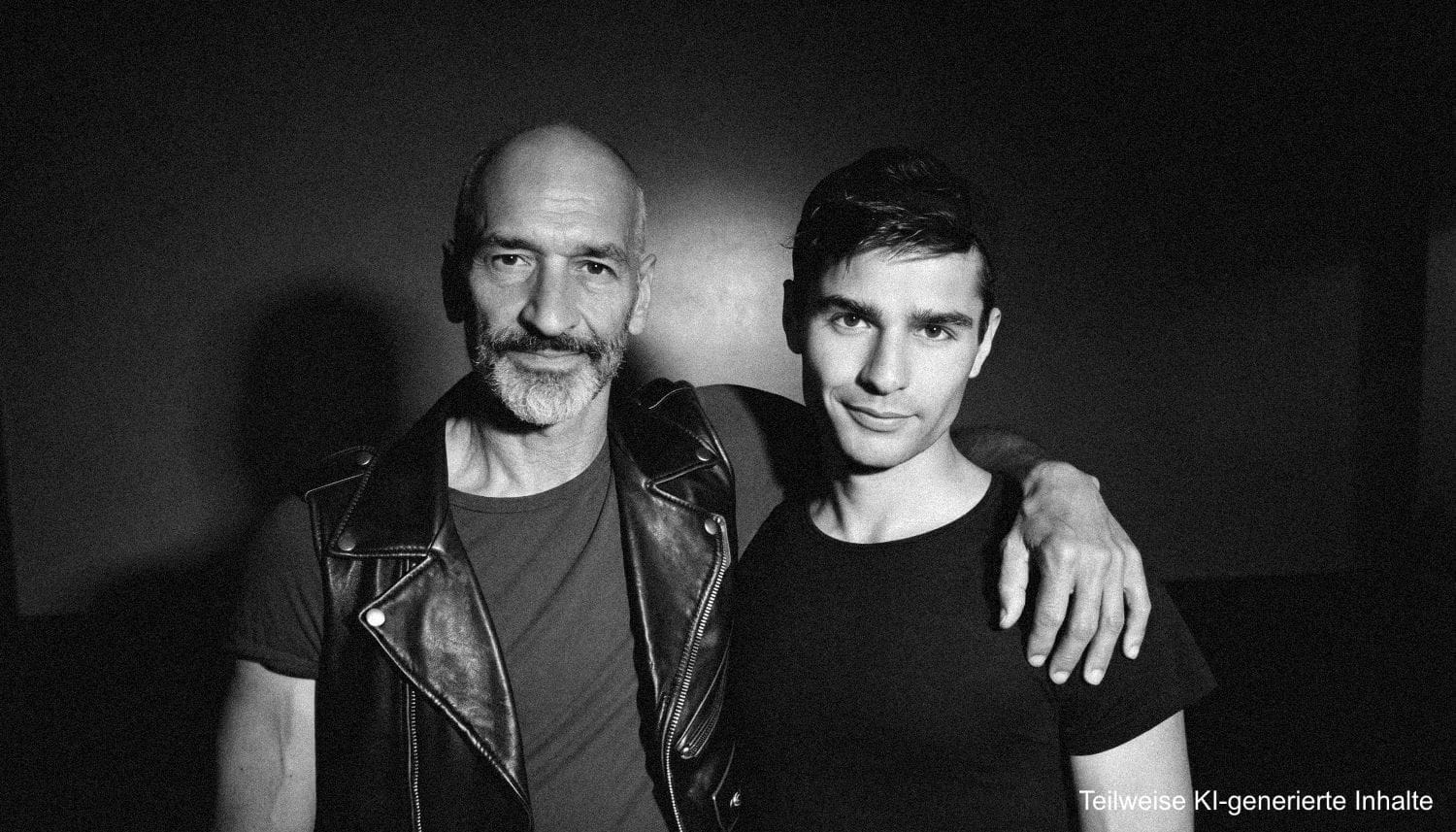
Success stories & existing clubs
This section is growing – with every club founded under the umbrella of Fist Club Europe e.V. You will be introduced here with short profiles: Who are you, where are you located, what do you do, and how can you be contacted?
What we learn from the first clubs we establish flows directly back into the templates, training, and consulting services for subsequent clubs. A typical profile includes:
- Name of the club, its location, and the year it was founded.
- Brief description: What are the main focuses? Education, events, political work, or a combination thereof?
- How many members, how many active volunteers?
- What local collaborations exist (AIDS support organizations, Pride organizations, checkpoints, universities)?
- What were the biggest challenges during the founding process – and how were they solved?
- Contact: Website, email, possibly social media profiles.
We are deliberately not naming any names here until the clubs themselves have given their consent and the profiles have been editorially approved. Visibility is valuable – but it must be voluntary and desired. The list is constantly being expanded.
If you’ve recently founded or are planning to found a club and would like to be featured here: write to us. We’ll create the profile together with you.
World map: Local fist clubs & contact points
On the main website you will find our interactive world map – zoomable, searchable, with direct contact options for every registered club and contact point. Four categories are distinguished:
Fully registered clubs – legal entities with their own legal form, board of directors, and bylaws. Independent members within the Fist Club network.
Local groups – activities under the umbrella of Fist Club Europe e.V. without their own legal form. Ideal for cities where taking the step of founding an association is not yet feasible.
Contact points – individuals or small groups that serve as a point of contact for interested people locally, without a formal structure. This too is a start – and often the first step towards a local group or one’s own club.
Partner organizations – affiliated associations and NGOs (AIDS support groups, queer health initiatives, BDSM associations) with whom we collaborate thematically or operationally.
Want to be on the map? Send us a brief summary of yourself or your group. We’ll get in touch, clarify the details, verify the information, and then activate the listing.
Appendix: Quick overview of all countries
The following table provides a concise summary of the key data for the 20 countries covered. It is intended as a quick comparison – the details can be found in the corresponding fact sheet above.
| country | Legal form | Min. | Cost | Length of time |
| Germany | eV | 7 | approximately €100 | 4–8 weeks. |
| Austria | Ideal club | 2 | approx. €42 | 2–6 weeks. |
| Switzerland | Association (Civil Code) | 2 | 0–500 CHF | immediately–2 weeks. |
| Netherlands | Association | 2 | €300–700 | 1–4 weeks. |
| Belgium | ASBL/VZW | 2 | approx. €150–200 | 4–8 weeks. |
| France | Association law 1901 | 2 | free of charge | 2–4 weeks. |
| UK | CIO / CIC | 1–3 | £0–30 | 2–8 weeks. |
| Ireland | CLG / Charity | 1–3 | 50–100 € | 2–6 weeks. |
| Sweden | Ideell förening | 3 | free of charge | immediately–2 weeks. |
| Denmark | Foruming | 2–3 | free of charge | immediately–2 weeks. |
| Finland | Yhdistys (ry) | 3 | approx. €60 | 3–6 weeks. |
| Spain | Association | 3 | approx. €50–100 | 4–8 weeks. |
| Italy | APS / ETS | 7 | €200–500 | 4–12 weeks. |
| Portugal | Associação | 3 | approximately €300 | 1–6 weeks. |
| Poland | Stowarzyszenie | 7 | free of charge | 4–10 weeks. |
| Greece | Σωματείο | 20 | €100–300 | 6–12 weeks. |
| USA | Nonprofit / 501(c)(3) | 3 | $60–600 | 4–12 weeks. |
| Canada | Nonprofit / Charity | 3 | 200 CAD | 4–8 weeks. |
| Brazil | Civil Association | 2 | 200–500 BRL | 4–10 weeks. |
| Australia | Inc. Assoc. / CLG | 1–5 | 50–500 AUD | 4–8 weeks. |
The “Min.” column indicates the minimum number of founding members required. Costs and duration are guidelines – both can vary considerably in individual cases.