


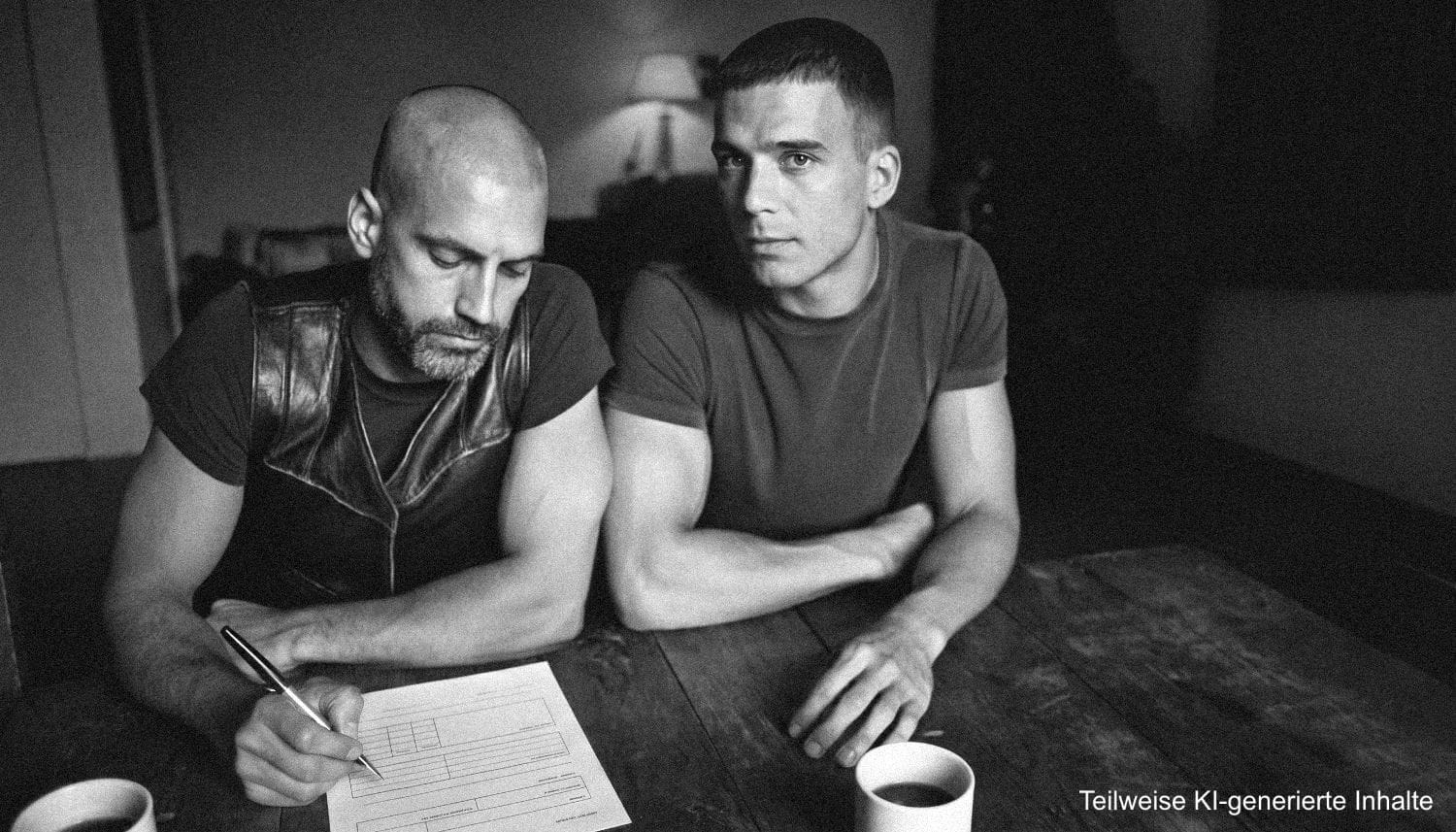
Financial support for founding a club
Money shouldn’t be the reason a club doesn’t come into existence. That’s why Fist Club Europe e.V. covers a clearly defined share of the founding costs and, on top of that, looks at each case individually to see what makes sense and what is feasible.
A fisting club is the answer to that. Not as a back-room meet-up, but as a visible, organised structure. An association that pools knowledge, provides education, creates spaces, and speaks up publicly for the interests of the community. In short: the difference between “a few guys hanging out” and “a serious civil-society voice”.
What we reimburse 1:1
- Notary and certification costs for the founding meeting and the registration of the board.
- Registration fees with the relevant association, commercial, or charity register in the respective country.
- Publication and announcement fees, where legally required (e.g. Moniteur Belge in Belgium, Journal Officiel in France).
We reimburse these items in full against receipts – regardless of the country. The precondition is that the newly founded club shares the goals set out in § 2 of our statutes and sees itself as part of the Fist Club network.
What we review on a case-by-case basis
Anything that goes beyond the pure registration costs we look at together with you. This includes, for example:
- Initial legal or tax consultation, where the legal situation in the respective country is complex.
- Initial set-up for the association’s work (e.g. domain, hosting, a professional email address, an accounting software license for the first year).
- Printing costs for educational material that is handed out at public events.
- Seed funding for your first own event, where venues or materials have to be paid for up front.
We deliberately decide on these on a case-by-case basis – not out of stinginess, but because the needs vary widely. A club in Lisbon with three founders and a shared-flat living room as their venue needs something different from an association in Toronto that wants to cooperate directly with the local AIDS service organisation.
How the application process works
- You get in touch with us and briefly describe what you’re planning: country, number of founders, intended focus areas.
- We send out a questionnaire covering the key information and arrange a short video call.
- On that basis we confirm the coverage of registration and notary costs in writing and discuss everything else.
- Once the association is founded, you submit the receipts and we transfer the agreed amount.
The whole process usually takes two to four weeks. We don’t promise waiting times of months or thousand-page application forms – that’s exactly the kind of bureaucracy we ourselves find annoying.
Money is one thing. Just as important: you shouldn’t have to reinvent the wheel every time. Over the past few years we’ve built up a range of templates, tools, and content that we make available to clubs founded under our umbrella.
Templates & documents
- Model statutes for the main legal forms (e.V., association loi 1901, vereniging, asociación, 501(c)(3) Articles of Incorporation, CIO Constitution, and others) – each with the clauses that are typically required for charitable status.
- Founding meeting minutes, fee schedules, and rules of procedure for the board.
- Templates for membership applications, privacy notices (GDPR-compliant), and consent forms for photo and video material at events.
- Templates for press releases, grant applications, and cooperation requests to AIDS service organisations or public health authorities.
Software & technical infrastructure
- A website builder based on our own static site – multilingual, GDPR-compliant, no tracking nonsense.
- Membership administration and accounting: tested open-source and commercial solutions on terms we have negotiated.
- Email infrastructure under your-club@fist.club subdomains, if desired.
- Newsletter integration via the shared Fist Club newsletter system.
We want founding a club to stop being a heroic story and become a matter of routine. The more templates, shared experiences, and common infrastructure there are, the lower the bar becomes – and the more clubs come into being.